

Thì quá khứ đơn (Simple Past Tense) là một trong những thì cơ bản và dễ học nhất trong tiếng Anh, được sử dụng phổ biến để diễn tả các hành động, sự việc đã xảy ra và kết thúc trong quá khứ. Việc thường xuyên luyện bài tập thì quá khứ đơn không chỉ giúp bạn ghi nhớ công thức nhanh hơn mà còn rèn khả năng vận dụng linh hoạt khi giao tiếp và viết tiếng Anh thực tế. Đây là bước nền quan trọng giúp bạn học tốt các thì khác trong ngữ pháp tiếng Anh.
Tìm hiểu thì quá khứ đơn trước khi làm bài tập
Trước khi làm bài tập thì quá khứ đơn, bạn nên nắm vững các điểm ngữ pháp cơ bản của thì này để hiểu rõ cách dùng và cách chia động từ.
Thì quá khứ đơn là gì?

Thì quá khứ đơn (past simple tense) dùng để diễn tả một hành động, sự việc diễn ra và kết thúc tại một thời điểm xác định trong quá khứ. Khi học các thì trong tiếng Anh, quá khứ đơn là một thì cơ bản mà bạn cần nắm vững.
Ví dụ:
• I played football with classmates yesterday. (Hôm qua tôi đã chơi bóng đá cùng các bạn trong lớp)
• She visited Ha Long Bay last week. (Cô ấy đã du lịch Vịnh Hạ Long vào tuần trước).
Thì quá khứ đơn được đánh giá là thì đơn giản, phổ biến thứ hai sau thì hiện tại đơn.
Công thức thì quá khứ đơn

| Thì quá khứ đơn với động từ “to be” | Thì quá khứ đơn với động từ thường | |
| Thể khẳng định |
S + was/were +… Lưu ý: • I/She/He/It/Danh từ số ít + was • They/We/You/Danh từ số nhiều + were Ví dụ: • I was at home yesterday. (Hôm qua tôi đã ở nhà) • They were in Sapa on their vacation last year. (Họ đã ở Sapa vào kỳ nghỉ năm trước) |
S + V2/ed+… Lưu ý: V2/ed: Là dạng của động từ có quy tắc hoặc bất quy tắc khi chia ở thì quá khứ đơn. Ví dụ: • We went to the stadium yesterday to watch the football match. (Chúng tôi đến sân vận động để xem trận bóng đá vào hôm qua) • We visited grandparents last month. (Chúng tôi thăm ông bà vào tháng trước). |
| Thể phủ định |
S + was/were + not… Lưu ý: was not = wasn’t were not = weren’t Ví dụ: • She wasn’t at school last Tuesday. (Cô ấy không ở trường vào thứ 3 trước). • They weren’t happy because their team lost. (Họ không vui vì đội của họ đã thua). |
S + did not + V (nguyên mẫu) Lưu ý: did not = didn’t Ví dụ: • They didn’t come back home last night. (Họ không trở về nhà tối qua) • She didn’t accept my offer. (Cô ấy không đồng ý lời đề nghị của tôi) |
| Thể nghi vấn | Câu hỏi Yes/No question
Was/Were + S + ….? Trả lời: Yes, S + was/were. No, S + wasn’t/weren’t. Ví dụ: • Were you alone yesterday? (Bạn đã ở một mình hôm qua?) Yes I was / No I wasn’t. |
Câu hỏi Yes/No question
Did + S + V (nguyên mẫu)…? Trả lời: Yes, S + did. No, S + didn’t. Ví dụ: • Did you send her an email? (Bạn đã gửi email cho cô ấy phải không?) Yes, I did / No I didn’t. • Did they win the football match? (Họ đã chiến thắng trận bóng đúng không?) Yes, they did / No, they didn’t. |
| Câu hỏi WH- question:
WH-word + was/were + S + (not) +..? Trả lời: S + was/were + (not)+… Ví dụ: • Where was she last week? (Tuần trước cô ấy đã ở đâu?) • Why were you happy? (Tại sao bạn vui vậy?) |
Câu hỏi WH- question:
WH-word + did + S + (not) + V (nguyên mẫu)? Trả lời: S + V2/ed+… Ví dụ: • Why did you cry last night? (Sao tối qua bạn khóc vậy?) • How did you solve the problem? (Bạn đã giải quyết vấn đề thế nào vậy?) |
>>> Tìm hiểu thêm: Thì quá khứ đơn (Past simple): Công thức, cách dùng & dấu hiệu nhận biết
Cách áp dụng thì quá khứ đơn vào bài tập
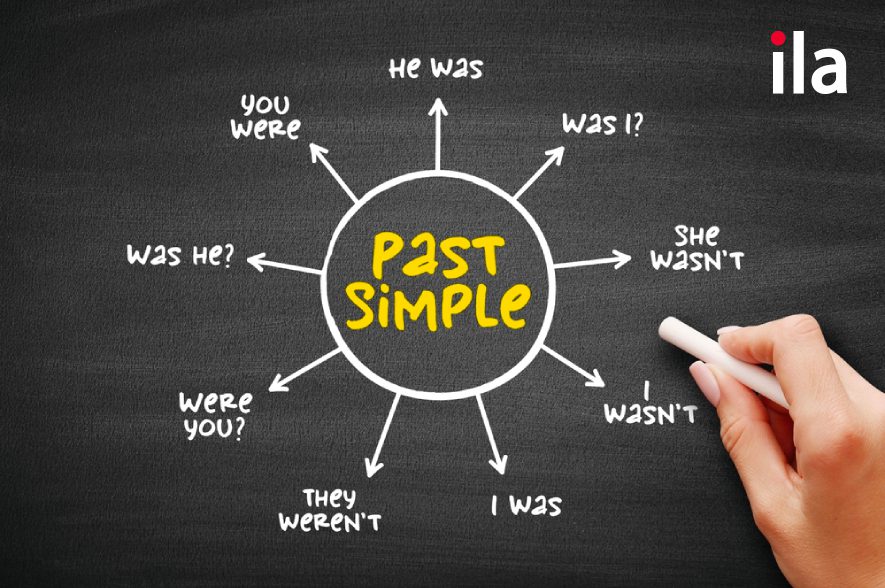
Trước khi thực hành phần bài tập thì quá khứ đơn, bạn nên nắm chắc một số thông tin về cách sử dụng thì này.
1. Thì quá khứ đơn diễn tả hành động, sự việc diễn ra tại một thời điểm hoặc một khoảng thời gian cụ thể trong quá khứ. Hành động, sự việc này đã hoàn toàn kết thúc ở quá khứ.
Ví dụ:
• I went to Da Nang last summer.
(Tôi đã đi Đà Nẵng vào mùa hè năm ngoái.)
2. Thì quá khứ đơn diễn tả một hành động lặp đi lặp lại trong quá khứ.
Ví dụ:
• They always visited grandparents on summer vacation.
(Họ luôn về thăm ông bà vào dịp nghỉ hè).
3. Thì quá khứ đơn diễn tả một hành động xen vào một hành động khác đang diễn ra trong quá khứ.
Ví dụ:
• When my mother was cooking, my brother came home.
(Khi mẹ tôi đang nấu ăn, anh trai tôi về.)
4. Thì quá khứ đơn được dùng trong mệnh đề điều kiện (if-clause) của câu điều kiện loại II.
Ví dụ:
• If I had a lot of money, I would buy a big house.
(Nếu tôi có nhiều tiền, tôi sẽ mua một ngôi nhà lớn.)
>>> Tìm hiểu thêm: Thông tin A-Z cách phân biệt câu điều kiện loại 1 và 2
5. Thì quá khứ đơn được dùng sau cấu trúc wish để diễn tả một điều ước không có thật ở hiện tại.
Ví dụ:
• I wish I were beside you now.
(Tôi ước mình ở cạnh cậu lúc này.)
6. Thì quá khứ đơn dùng để nói về một sự kiện lịch sử.
Ví dụ:
• Edison invented bulbs.
(Ê-đi-xơn đã phát minh ra bóng đèn.)
7. Thì quá khứ đơn diễn tả một hành động xảy ra ở một thời điểm nhất định, kể cả khi thời điểm này không được đề cập đến.
Ví dụ:
• I bought this book in a bookstore in Nha Trang.
(Tôi mua cuốn sách này ở một nhà sách ở Nha Trang).
Cách học ngữ pháp tiếng Anh hiệu quả là thực hành với các bài tập áp dụng. Vì thế, bạn hãy làm bài tập thì quá khứ đơn để ghi nhớ kiến thức tốt hơn nhé.
>>> Tìm hiểu thêm: Cách học ngữ pháp tiếng Anh ghi nhớ nhanh và ngấm lâu
Bài tập thì quá khứ đơn có đáp án

Bài tập thì quá khứ đơn có nhiều dạng như bài tập chia động từ quá khứ đơn, bài tập viết lại câu thì quá khứ đơn… Sau đây là bài tập thì quá khứ đơn có đáp án từ cấp độ cơ bản đến nâng cao giúp bạn nắm chắc ngữ pháp khi học tiếng Anh.
Bài tập 1: Bài tập thì quá khứ đơn cơ bản
1. Daisy (bring) some chocolates to the birthday party.
2. I (hear) a new song on the radio.
3. Peter (read) three books last week.
4. The Smiths (speak) Italian to the waitress.
5. Peter (understand) during the class, but now he doesn’t understand.
6. My mother (forget) to buy some milk.
7. Susan (have) a baby in August.
8. We (lose) our keys last Friday.
9. They (swim) 500m yesterday afternoon.
10. I (give) my mother a CD for her birthday.
11. At the age of 23, she (become) a teacher.
12. I (know) the answer yesterday.
13. Peter (tell) me that he lived in New York.
14. We (lend) John €200.
15. She (drink) too much coffee yesterday.
16. The children (sleep) in the car.
17. He (keep) his promise.
18. We (choose) the steak for dinner.
19. The film (begin) late.
20. They (fly) to Madrid.
21. We (drive) to Edinburgh.
22. Mrs. Black (teach) English at the University.
23. They (send) me an e-mail earlier.
24. We (leave) at 7 a.m.
Bài tập 2: Bài tập thì quá khứ đơn nâng cao
Last Easter holidays Jimmy and Paul _____(go) camping in the mountains. They ________(spend) a wonderful time there. They _____(wake up) early in the morning and then they ______(go) for a walk. In the village they ______(buy) everything they _____(need).
In the afternoon they _______(play) football, ______(watch) the birds and _____(swim) in the river. They ______(not have) a TV set, so after dinner they _______(talk) for a while and then they ________(go) to sleep.
One night, Jimmy _______(have) a very strange dream: they ______(be) by the river watching the moon. Suddenly they ________(hear) someone calling “Hello! Hello!” They ________(turn) around and they ______(see) a strange creature.
It ________(be) green and very small. He _________( invite) them to go to his spaceship. There they ________(meet) other strange creatures and a beautiful princess.
They _______(sit) down round a table and they ________(eat) some strange food. Jimmy ________(drink) a glass of fruit juice. It ________(taste) good so he _______(ask) for another glass of it.
After a while he ________(feel) a bit strange. Oh, dear…he _________(turn) green and small like the others. The princess ________(not be) beautiful anymore and she ______(look) horrible. What was happening?
He ______(open) his eyes and … what a relief! It ____(be) only a dream!

Bài tập 3: Bài tập thì quá khứ đơn viết lại câu
1. / painted / a picture / she/ yesterday
2. watch / Susan / didn’t / a film
3. you / cook / did / dinner /the /?
4. guitar /didn’t /Cynthia /last week /play /the
5. last year / they / work / did / in a hospital /?
6. It/ be/ rainy/ last night
7. In 1990/ they/ move/ to another city.
8. My mother/ not/ go/ to the pagoda/ a month ago.
9. How/ your father/ get there?
10. My/ grandmother/ make/ three/ cake/ a/ day/ ago.
Bài tập 4: Bài tập tổng hợp thì quá khứ đơn
Yêu cầu 1: Đọc đoạn văn sau
Albert Einstein was one of the most famous scientists of all time. He developed the special and general theories of relativity and made many other important discoveries.
Albert Einstein was born on March 14, 1879, in Ulm, Germany. He grew up in a secular Jewish family. His father was a salesman and engineer and his mother was a housewife. Einstein had one sister, Maja, who was born two years after him.
He studied at the Luitpold Gymnasium in Munich. He didn’t like studying there. One teacher even told him that he would never get anywhere. At this time, Einstein became interested in classical music and he learned to play the violin. He was also interested in science.
In the 1890s, Einstein’s family moved to Milan, Italy. Einstein started studying at the Swiss Federal Polytechnic School in Zürich. His years in Zürich were some of the happiest years of his life. He became friends with many other students and met his future wife, Mileva Maric, a physics student from Serbia.
Einstein finished his university studies and found work in a Swiss patent office. In his free time, Einstein continued studying physics. He married Mileva Maric in 1903, but the marriage was not a happy one.
They divorced in 1919 and Einstein married Elsa Löwenthal. In 1905, Einstein published four important papers about physics. The fourth paper included the famous equation E=mc2. In 1921, he won the Nobel Prize for Physics.
From 1913 to 1933, Albert Einstein was the director of the Kaiser Wilhelm Institute for Physics in Berlin. He often traveled around the world and gave talks about physics. While Einstein was traveling and speaking internationally, the Nazis were becoming more and more powerful. Einstein’s life was in danger.
In 1932, he decided to leave Germany forever. He moved to the United States and took on a position at the Institute for Advanced Study at Princeton, New Jersey.
Einstein became an American citizen in 1935. In 1939, he and his friend Leo Szilard wrote a letter to President Franklin D. Roosevelt. They warned him that the Nazis might be trying to create an atomic bomb. The United States started a program to create its nuclear weapons.
After learning of the 1945 bombing of Hiroshima, Einstein became active in trying to stop future use of nuclear weapons. He also supported the civil rights of African Americans. In 1952, he was offered to become the president of Israel, but he respectfully declined.
Albert Einstein died on April 18, 1955, in Princeton, New Jersey.
Yêu cầu 2: Trả lời các câu hỏi sau dựa vào các thông tin trong bài đọc
1. What was Albert Einstein’s father’s job? _____________________________________________________________
2. What did Albert Einstein do after he finished his university studies? _______________________________________
3. When did Albert Einstein get the Nobel Prize for Physics? _______________________________________________
4. Why did Einstein decide to leave Germany? __________________________________________________________
5. When did Einstein become an American citizen? ______________________________________________________
6. Why did Einstein write a letter to F. D. Roosevelt? _____________________________________________________
7. What did Einstein do after he learned about the bombing of Hiroshima? ___________________________________
Yêu cầu 3: Những câu sau viết đúng (T) hay sai (F)?
1. Albert Einstein was older than his sister. _____
2. Albert Einstein didn’t enjoy studying at the Luitpold Gymnasium in Munich. _____
3. Albert Einstein could play the violin. _____
4. Albert Einstein’s first wife was from Serbia. _____
5. Albert Einstein published his most famous equation in 1905. _____
6. Albert Einstein supported the civil rights of black people. _____
7. In 1952, Albert Einstein became the president of Israel. _____
>>> Tìm hiểu thêm: Phương pháp học tiếng Anh hiệu quả nhất thế giới dành cho bạn
Đáp án bài tập thì quá khứ đơn

Bài tập 1
1. brought
2. heard
3. read
4. spoke
5. understood
6. forgot
7. had
8. lost
9. swam
10. gave
11. became
12. knew
13. told
14. lent
15. drank
16. slept
17. kept
18. chose
19. began
20. flew
21. drove
22. taught
23. sent
24. left
Bài tập 2
Last Easter holidays Jimmy and Paul went (go) camping in the mountains. They spent (spend) a wonderful time there. They woke up (wake up) early in the morning and then they went (go) for a walk. In the village, they bought (buy) everything they needed (need).
In the afternoon they played (play) football, watched (watch) the birds and swam (swim) in the river. They didn’t have (not have) a TV set, so after dinner they talked (talk) for a while and then they went (go) to sleep. One night, Jimmy had (have) a very strange dream: they were (be) by the river watching the moon.
Suddenly they heard (hear) someone calling “Hello! Hello!” They turned (turn) around and they saw (see) a strange creature.
It was (be) green and very small. He invited (invite) them to go to his spaceship. There they met (meet) other strange creatures and a beautiful princess.
They sat (sit) down round a table and they ate (eat) some strange food. Jimmy drank (drink) a glass of fruit juice. It tasted (taste) good so he asked (ask) for another glass of it. After a while, he felt (feel) a bit strange. Oh, dear…he turned (turn) green and small like the others.
The princess wasn’t (not be) beautiful anymore and she looked (look) horrible. What was happening? He opened (open) his eyes and … what a relief! It was (be) only a dream!

Bài tập 3
1. She painted a picture yesterday.
2. Susan didn’t watch a film.
3. Did you cook the dinner?
4. Cynthia didn’t play the guitar last week.
5. Did they work in a hospital last year?
6. It was rainy last night.
7. In 1990, they moved to another city.
8. My mother did not go to the pagoda a month ago.
9. How did your father get there?
10. My grandmother made three cakes yesterday hoặc My grandmother made three cakes a day before.
Bài tập 4
Phần trả lời câu hỏi
1. What was Albert Einstein’s father’s job? He was a salesman and an engineer.
2. What did Albert Einstein do after he finished his university studies? He worked in a Swiss patent office.
3. When did Albert Einstein get the Nobel Prize for Physics? In 1921.
4. Why did Einstein decide to leave Germany? Because his life was in danger because of the Nazis.
5. When did Einstein become an American citizen? In 1935.
6. Why did Einstein write a letter to F. D. Roosevelt? To warn him that the Nazis might be trying to create an atomic bomb.
7. What did Einstein do after he learned about the bombing of Hiroshima? He became active in trying to stop future use of nuclear weapons.
(T) or (F)
1.T, 2.T, 3.T, 4.T, 5.T, 6.T, 7.F

Bộ đề luyện tập bài tập thì quá khứ đơn có đáp án
Tải miễn phí: Bộ đề chuyên sâu thì quá khứ đơn (PDF)
PHẦN 1. ĐỀ 1–3: CƠ BẢN
📝 ĐỀ 1
Chia động từ trong ngoặc ở thì quá khứ đơn.
1. I ___ (watch) TV last night.
2. She ___ (not go) to school yesterday.
3. They ___ (play) football in the park.
4. We ___ (visit) our grandparents last weekend.
5. ___ you ___ (enjoy) the party?
6. My father ___ (work) in a factory when he was young.
7. He ___ (not call) me last night.
8. What time ___ you ___ (get) home?
9. It ___ (rain) a lot last summer.
10. She ___ (cook) dinner for her family yesterday.
📝 ĐỀ 2
Chọn đáp án đúng nhất.
1. We ___ to the cinema yesterday.
A. go B. goes C. went D. going
2. They didn’t ___ to the meeting last week.
A. come B. came C. comes D. coming
3. ___ she study English yesterday?
A. Did B. Do C. Does D. Was
4. My sister ___ a letter to her friend last night.
A. write B. wrote C. written D. writes
5. I ___ at home because it was raining.
A. stayed B. stay C. stays D. staying
📝 ĐỀ 3
Viết lại câu theo gợi ý.
1. She cleans her room every day. → (Hôm qua)
2. They don’t go to school on Sundays. → (Tuần trước)
3. Does he like coffee? → (Sử dụng “Did”)
4. We eat lunch at 12 o’clock. → (Hôm qua)
5. I don’t play badminton in the evening. → (Tối qua)
PHẦN 2. ĐỀ 4–6: TRUNG CẤP
📝 ĐỀ 4
Hoàn thành câu với động từ trong ngoặc.
1. When I ___ (be) a child, I ___ (love) to play in the garden.
2. She ___ (study) English for two years before she ___ (move) to London.
3. They ___ (not arrive) on time because the bus ___ (break) down.
4. What ___ you ___ (do) last weekend?
5. He ___ (not know) the answer, so he ___ (ask) the teacher.
📝 ĐỀ 5
Điền từ phù hợp vào chỗ trống (dạng quá khứ đơn).
Yesterday was a busy day. I (wake up) ___ at 6:30 a.m. and (have) ___ breakfast with my family. Then I (go) ___ to school and (study) ___ for five hours. In the afternoon, I (play) ___ basketball with my friends. After dinner, I (watch) ___ a movie and (go) ___ to bed at 10 p.m.
📝 ĐỀ 6
Đọc đoạn văn và trả lời câu hỏi.
Last summer, my family went to Da Lat. We stayed in a small hotel near the lake. Every morning, we walked around Xuan Huong Lake and took many photos. One day, we visited a flower garden and bought some souvenirs. The weather was cool and pleasant. We really enjoyed our holiday.
Câu hỏi:
1. Where did the family go last summer?
2. Where did they stay?
3. What did they do every morning?
4. What did they buy?
5. How was the weather?
PHẦN 3. ĐỀ 7–8: NÂNG CAO
📝 ĐỀ 7
Viết lại câu sử dụng cấu trúc phù hợp với thì quá khứ đơn.
1. I’m not rich now, but I wish I ___ rich.
2. If he ___ (know) the answer, he would tell you.
3. When she ___ (enter) the room, everyone ___ (stop) talking.
4. It ___ (be) the first time I ___ (see) such a big whale.
5. He ___ (feel) tired because he ___ (work) all day.
📝 ĐỀ 8
Đọc đoạn văn nâng cao và chọn True (T) hoặc False (F).
Thomas Edison was one of the greatest inventors in history. He created more than 1,000 inventions, including the electric light bulb. Edison was born in 1847 in Ohio, USA. As a child, he loved reading and experimenting. He worked hard and became a famous inventor. He died in 1931, but his inventions changed the world forever.
1. Edison invented the electric light bulb. ( )
2. He was born in 1947. ( )
3. He liked doing experiments as a child. ( )
4. Edison made more than 1,000 inventions. ( )
5. He is still alive today. ( )
PHẦN 4. ĐÁP ÁN CHI TIẾT BÀI TẬP THÌ QUÁ KHỨ ĐƠN
ĐỀ 1
1. watched 2. didn’t go 3. played 4. visited 5. Did you enjoy 6. worked 7. didn’t call 8. did you get 9. rained 10. cooked
ĐỀ 2
1. C 2. A 3. A 4. B 5. A
ĐỀ 3
1. She cleaned her room yesterday.
2. They didn’t go to school last week.
3. Did he like coffee?
4. We ate lunch at 12 o’clock yesterday.
5. I didn’t play badminton last night.
ĐỀ 4
1. was / loved
2. studied / moved
3. didn’t arrive / broke
4. did you do
5. didn’t know / asked
ĐỀ 5
woke up / had / went / studied / played / watched / went
ĐỀ 6
1. Da Lat
2. In a small hotel near the lake
3. Walked around the lake and took photos
4. Souvenirs
5. Cool and pleasant
ĐỀ 7
1. were 2. knew 3. entered / stopped 4. was / had seen 5. felt / had worked
ĐỀ 8
1. T 2. F 3. T 4. T 5. F
Lỗi thường gặp khi làm bài tập thì quá khứ đơn và cách sửa
| Lỗi thường gặp | Ví dụ sai | Cách sửa đúng | Giải thích ngắn gọn |
|---|---|---|---|
| Dùng “did” rồi vẫn chia động từ ở quá khứ | Did you went to school yesterday? | Did you go to school yesterday? | “Did” đã mang ý quá khứ, động từ chính giữ nguyên mẫu. |
| Thêm -ed vào động từ bất quy tắc | She goed shopping last weekend. | She went shopping last weekend. | Động từ bất quy tắc không thêm “-ed”. |
| Dùng was/were chung với động từ thường | He was went to the park. | He went to the park. | “Was/were” không đi cùng động từ thường trong thì quá khứ đơn. |
| Quên đổi sang dạng phủ định hoặc nghi vấn đúng cấu trúc | She not go to work yesterday. | She didn’t go to work yesterday. | Câu phủ định phải có “did not / didn’t” + động từ nguyên mẫu. |
| Nhầm lẫn giữa Past Simple và Past Continuous | When I arrived, she cooked dinner. | When I arrived, she was cooking dinner. | Hành động đang diễn ra dùng Past Continuous; hành động hoàn thành dùng Past Simple. |
| Dùng sai “was/were” với chủ ngữ | They was late for class. | They were late for class. | “They/We/You” dùng “were”; “I/He/She/It” dùng “was”. |
| Bỏ qua dấu hiệu nhận biết thì quá khứ đơn | I go to Hanoi last year. | I went to Hanoi last year. | Các từ “yesterday, last week, ago…” báo hiệu dùng Past Simple. |
7 mẹo tránh lỗi thường gặp khi làm bài tập thì quá khứ đơn
1. Nhớ chỉ dùng động từ nguyên mẫu sau “did”
• Sai: Did you went to school yesterday?
• Đúng: Did you go to school yesterday?
Giải thích: “Did” đã mang ý quá khứ, nên động từ chính giữ nguyên mẫu.
2. Không thêm “-ed” cho động từ bất quy tắc
• Sai: I goed to the park.
• Đúng: I went to the park.
Giải thích: Luôn học và ghi nhớ danh sách động từ bất quy tắc (V2).
3. Không dùng “was/were” với động từ thường trong cùng câu
• Sai: He was went to work.
• Đúng: He went to work.
Giải thích: “Was/were” chỉ đi với tính từ, danh từ, trạng từ – không đi với động từ thường.
4. Phân biệt rõ câu khẳng định và phủ định
• Sai: She didn’t went shopping.
• Đúng: She didn’t go shopping.
Giải thích: Khi đã có “didn’t”, động từ trở lại nguyên mẫu.
5. Luôn xác định rõ dấu hiệu thời gian quá khứ
yesterday, last week, ago, in 2000…
Giải thích: Nếu bạn thấy các từ này thì gần như chắc chắn dùng Past Simple.
6. Đừng nhầm với thì quá khứ tiếp diễn
• Sai: When I arrived, she cooked dinner, vì đây là hành động đang diễn ra.
• Đúng: When I arrived, she was cooking dinner.
Giải thích: Hành động đang diễn ra trong quá khứ dùng Past Continuous, không phải Past Simple.
7. Kiểm tra ngôi chủ ngữ để chọn đúng “was/were”
• I / He / She / It dùng was
• You / We / They dùngwere
Giải thích: Lỗi chia sai “to be” là lỗi cơ bản nhưng rất thường gặp.
Trên đây là tổng hợp đầy đủ kiến thức lý thuyết và bài tập thì quá khứ đơn giúp bạn ôn luyện ngữ pháp hiệu quả. Việc thường xuyên thực hành các bài tập về thì quá khứ đơn sẽ giúp bạn ghi nhớ công thức, nhận diện dấu hiệu và sử dụng chính xác trong giao tiếp hằng ngày. Hãy kiên trì luyện tập mỗi ngày để nâng cao khả năng tiếng Anh của mình một cách tự nhiên và bền vững nhé!
>>> Tìm hiểu thêm: 15 lợi ích của việc học tiếng Anh bạn cần biết